
Monday, January 9, 2012

Oz Seeds

 MELBOURNE, Jan 9 (Reuters) - Men's seeds for the 2012
Australian Open, which starts at Melbourne Park next Monday.
1. Novak Djokovic (Serbia)
2. Rafa Nadal (Spain)
3. Roger Federer (Switzerland)
4. Andy Murray (Britain)
5. David Ferrer (Spain)
6. Jo-Wilfried Tsonga (France)
7. Tomas Berdych (Czech Republic)
8. Mardy Fish (U.S.)
9. Janko Tipsarevic (Serbia)
10. Nicolas Almagro (Spain)
11. Juan Martin Del Potro (Argentina)
12. Gilles Simon (France)
13. Alexandr Dolgopolov (Ukraine)
14. Gael Monfils (France)
15. Andy Roddick (U.S.)
16. John Isner (U.S.)
17. Richard Gasquet (France)
18. Feliciano Lopez (Spain)
19. Viktor Troicki (Serbia)
20. Florian Mayer (Germany)
21. Stanislas Wawrinka (Switzerland)
22. Fernando Verdasco (Spain)
23. Milos Raonic (Canada)
24. Kei Nishikori (Japan)
25. Juan Monaco (Argentina)
26. Marcel Granollers (Spain)
27. Juan Ignacio Chela (Argentina)
28. Ivan Ljubicic (Croatia)
29. Radek Stepanek (Czech Republic)
30. Kevin Anderson (South Africa)
31. Jurgen Melzer (Austria)
32. Alex Bogomolov Jr. (United States)


(Compiled by Nick Mulvenney, editing by Peter Rutherford)	


(For the
sports blog Left Field go to: blogs.reuters.com/sport))

Saturday, January 7, 2012

Raonic in SAP -- 13 Feb

The SAP Open, the premier men’s professional tennis tournament in Northern California, announced Friday the singles players on the tournament's Direct Acceptance List.

Included in the singles 28-draw are two players formerly ranked No. 1 in the world – American Andy Roddick and Australian Lleyton Hewitt, each of whom are former SAP Open champions. The field features players representing 13 countries: United States, Germany, Czech Republic, France, Australia, Israel, Colombia, Luxembourg, Belgium, South Africa, Bulgaria, Canada and Uzbekistan. Canada’s Milos Raonic returns to San Jose to defend his first ATP World Tour singles title.


ATP

Raonic in Chennai Finals

Fourth seed Raonic, who received the 2011 ATP Newcomer of the Year award, defeated second seed Nicolas Almagro of Spain 6-4, 6-4 in 73 minutes for a place in his third ATP World Tour final.

Raonic hit 10 aces and dropped four points on serve in the 35-minute first set. The 21 year old went onto convert his second break point opportunity at 30/40, 4-4 in the second set, before saving three break points in the next game. He struck 17 aces overall to snap a five-match losing streak against Top 10 opponents (4-8 overall).

ATP

Fisticuffs?

Tennis-Hopman referee steps in to part angry Fish and Dimitrov

By Will Swanton

PERTH | Fri Jan 6, 2012 3:29pm GMT

Jan 6 (Reuters) - American Mardy Fish and Bulgaria's Grigor Dimitrov had to be separated by the match referee when they squared up to each other during a changeover in a bad-tempered Hopman Cup encounter on Friday.

The pair traded insults throughout their singles match and the mixed doubles before the tie between the two bottom teams in Group A ended with a 2-1 win for Bulgaria over the defending champions.

Dimitrov, in a hurry to get through the tie as he had to catch a late-evening plane to Sydney, thrashed world number eight Fish 6-2 6-1 in the singles before helping Tsvetana Pironkova to beat the American and team mate Bethanie Mattek-Sands in the mixed doubles.

Fish, who also lost in straight sets to Czech Tomas Berdych on Wednesday, directed angry words at Dimitrov while the pair were shaking hands after the singles at Burswood Dome.

During the doubles, Fish appeared to hit a

ball straight at the Bulgarian and then approached him as he sat in a chair during a change of ends.

Dimitrov jumped to his feet and the two men argued fiercely before the match referee rushed on to the court and stood between them. It was nearly a minute before order was restored.

"What can I say? It was one of these days when every touch goes in," said Dimitrov, the world number 76 and a former junior champion at Wimbledon and the U.S. Open.

"Mardy was not on top of his game, but I think we had great rallies and gave a bit of entertainment as well. It's nice to have a win like this under my belt. I'm playing against a top-10 player and I've beaten him. Whatever I touched, it went in."

Mattek-Sands defeated Tsvetana Pironkova 6-4 6-4 in the opening match and Bulgaria had an 8-5 win in the mixed which was reduced to a single pro set so that Dimitrov could catch his flight.

Dimitrov and Pironkova took to the court for the doubles at 2110 local time, knowing that Dimitrov had to be on a 2350 flight so that he could play in qualifying for the Sydney International on Saturday.

He was rushed to the airport after the doubles finished at 2220.

Group winners the Czech Republic and France had already qualified for Saturday's Hopman Cup final.

Thursday, January 5, 2012

Thomas Muster

(CNN) -- Thomas Muster believes in reinvention, and he doesn't do things by half measures.

The former "King of Clay" beat career-threatening injuries at the age of 21 to become Austria's first grand slam tennis champion and only world No. 1 player. But he shocked everyone by disappearing into early retirement in Australia.

After years of excessively good living, he made his top-level comeback at the age of 43, having lost 25 kilograms in a punishing get-fit regime.

And now, after finally putting his racket down a year or so later, with his desire to compete on court at the highest level sated again, Muster will focus on his family and wine-making business.

"When I went back to Austria I was looking for property. I grew up in this area and I knew these vineyards and property and the streets around it," he says of the Hochkittenberg wine estate he bought off a church diocese in 2004.

A winning partnership

Muster teamed up with vintner Manfred Tement, who cultivates the eight hectares of land and put out their first joint Toms Hochkittenberg wine in 2005.

 Thomas Muster: Former King of Clay

"He's a great tennis fan and I asked him if this vineyard was worth a dollar. He said it's a fantastic vineyard and it's got great soil and everything you need," the Liebnitz-born father of two told CNN's Open Court.

"That's how we started working together and that's how he started developing the vineyard around our house. Now it's a beautiful area with sauvignon, burgundy and muscatel grapes.

"It's all about the Styrian wines, it's about white wines -- 85 or 90% of our produce is white wine or white grapes. It's one of the best sauvignon areas in the world. It's still undiscovered here, that's what we like about it, but I think in the next few years people are going to find out where this is."

Muster won the French Open in 1995 and was the world's top-ranked player for six weeks the following year before quitting in 1999. It turns out he has the same passion for grapes as he did on the court.

"It's lovely be here and it's lovely to be back home. Manfred loves tennis and I love wine. It's not my profession, it's my passion," says Muster, who also produces bottled spring water from the Styrian Hochschwab area.

"He's such a great teacher and over the last years I've learned so much about wine, about the culture of wine, It's a great adventure. I love him as a friend and we have such a great time in the vineyards.

"It's hard work. To work a vineyard, you need a lot of guts to do that. To go out there and work all year, you almost feel that these people talk to the grapes. Wine is a lifestyle and you can talk about it for ages. It's a passion but it's not something I can do on a daily basis."

Disappearing Down Under

Manfred loves tennis and I love wine. It's not my profession, it's my passion

Thomas Muster

When Muster moved to Australia after feeling burned out by tennis, he quickly ballooned in weight to almost 100 kg.

"When I lost to Nicolas Lapentti on Court Two at the French Open I knew this was going to be my last match and it was very emotional for me," he recalls.

"On the other hand it was so great to feel like, 'I don't have to get up in the morning and practice!' When I went back home I threw everything I had related to tennis in the bin. I was so tired of playing tennis, so tired of traveling, of hotels, everything related to this sport.

"Maybe I should have just taken six months off. I don't know if this was the solution but I just felt that I was ready to stop."

Known as the King of Clay before Gustavo Kuerten and Rafael Nadal came on the scene, Muster won a record 12 tournaments in 1995 -- a feat that was not matched until Roger Federer in 2004.

He won 40 of his 44 career titles on clay, but was also a strong competitor on hard courts as he twice reached the semifinals of the Australian Open and made the U.S. Open quarterfinals on three occasions.

Overcoming adversity

It was in the United States where his career almost ended in 1989, when he was hit by a drunk driver in the car park at the event now known as the Miami Masters in Key Biscayne, where he was due to play the final the next day.

"Coming back from two sets down (against former French Open champion Yannick Noah) and achieving top 10, you're entering the level everyone wants to be in. Then I'm seeing myself in hospital a couple of hours later and having a smashed knee. It was devastating," Muster recalls.

I was so tired of playing tennis, so tired of traveling, of hotels, everything related to this sport

Thomas Muster

"But I didn't really know meant to have ligaments torn, I didn't know the consequences that people have after that. So I was very positive. I thought it was going to be a few weeks and I'll be walking again, running again. But looking back it was a really, really hard time suffering from that injury.

"We started rehab straight away and it helped me a lot. I stayed in a rehab center for three months, working every day. I knew I couldn't run, but I had that touch, hitting balls and that routine I was going through, getting up, practicing, having therapy, doing weights.

"As soon as I could walk again I was able to play pretty good tennis because it was a great chance to build up my upper body. I almost felt like a chicken before, really skinny."

The King of Clay

In 1995 Muster won 40 consecutive matches on clay, the best run since Bjorn Borg's 46 successive victories. Nadal surpassed that mark when he won 81 in a row from 2005-07.

Muster returned to Key Biscayne and beat two-time French Open champion Sergi Bruguera of Spain in the 1997 final. It was to be his last ATP Tour title, with final defeats in Cincinnati later that year and Estoril in 1998.

After his last outing at Roland Garros, he decided to skip Wimbledon -- where he is the only top-ranked player to have never won a singles match on the hallowed grass courts in London.

"I just didn't come back and then suddenly people started asking, 'Where is Thomas, why isn't he playing?' The press started to call me and I said, 'I'm going on a holiday and I don't know when I'm going to return,' so I never actually retired," Muster explains.

He went to Australia, got married and had a son -- and completely forgot about tennis.

"I gave up everything I had in Europe and moved to a town north of Brisbane called Noosa Heads. I was 99 kilos, I smoked two packs of cigarettes a day," Muster says.

"When we got divorced it was a time to come back home. It's my secure place, my haven with my family. I came back here to get grounded again, and that's also when I started to play tennis again."

Back to basics

Working out up to seven hours a day, Muster soon trimmed down again and was able to compete on the seniors' Champions Tour. But the desire to play at the top level burned deeply, and he started again from the bottom on the Challenger circuit, where he found victories difficult to come by.

I think my family needs me more than anybody else, and tennis doesn't need me anymore. Now it's time to do something else

Thomas Muster

"It was a completely mad decision -- but it was great, I would do it any time again. I had the best time in the past year and a half ... to practice, to play, to get fit, to fight these guys and not be given a game," he says.

"I took my car and my coach, and we were driving thousands and thousands of kilometers. We had to drop in our keys to get three balls and a towel -- all things that are given at the big tournaments where they pick you up with great cars and they have the hospitality, food all day, trainers, physios.

"You go to a Challenger and it's in the middle of nowhere, there's no sun shining for you, a little crowd of a few hundred spectators. Okay I lost all those matches, I won a few, but it was great, it was grounding."

Family ties

Muster finally called it quits at the highest level at his home tournament in Vienna in October, losing in the first round.

"I decided to retire in Vienna because I left the scene very quietly and never had the chance to say goodbye," he says.

"I was never homesick when I played before, but now when I leave, when I see my daughter and I have to pack my bags, it's like, 'Do I have to go?' And when I lose I want to come back, and that's not a good sign for a professional player, you have to want to be out there.

"I don't want to stretch it to a limit where people think I'm stupid what I'm doing. I want to be respected for what I did. I don't want to use wild-cards for players who deserve it.

"It's been a great honor but at the end I want to say it's been a great time. I want to play a couple of senior tour events next year, but that's the level I can play at. You don't want to play tennis at 50 on a competitive level.

"I think my family needs me more than anybody else, and tennis doesn't need me anymore. I respect my wife a lot for taking all that in. She said, 'I didn't marry a tennis player, you'd retired.' Now it's time to do something else."

Wednesday, January 4, 2012

Raonic starts 2012 at Chennai

Jan 4 (Reuters) - Chennai Open men's singles second roundresults on Wednesday (prefix denotes seeding). Go Soeda (Japan) beat 5-Ivan Dodig (Croatia) 7-6(6) 6-3 3-Stanislas Wawrinka (Switzerland) beat Edouard Roger-Vasselin (France) 3-6 6-3 7-5 Dudi Sela (Israel) beat Benoit Paire (France) 4-6 6-2 6-4 4-Milos Raonic (Canada) beat Victor Hanescu (Romania) 6-1 6-4 (Compiled by Infostrada Sports; editing by Toby Davis)

Monday, January 2, 2012

Nadal's Heavier Racquet

DOHA | Mon Jan 2, 2012 3:45pm GMT

Jan 2 (Reuters) - World number two Rafa Nadal said his preparations for the new season had not been ideal as he adjusted to using a heavier racket.

The Spaniard, who plays Germany's Philip Kohlschreiber in the first round of the Qatar Open on Tuesday, believes his game may suffer in the short term after making the switch but would improve in the months ahead.

"My preparation is not the perfect one, and I'm trying to play with a little bit heavier racket, to get a little bit more power," Nadal told reporters on Monday.

"(With the new racket) I'm losing a little bit of control now, sometimes I don't feel the forehand as good as before. But it's something that I believe can help me in the future."

Nadal said he had first considered switching to a heavier racket after the U.S. Open in September but would not have had time to adapt because of his playing schedule.

"After the Davis Cup final I had all the rackets prepared at home to change," the 10-times grand slam champion added. "In theory I'm supposed to practise almost a month or at least three weeks with the (new) racket, but finally I practised only one week, and I'm here now, so probably it's not good enough.

"You can't think that everything will be perfect from the beginning, but you make the change thinking it'll be better in the future. There's no magic, but the new racket can help a little bit to improve my game. It's a risk I'm taking at the beginning of the season."

Kids Tennis - Slower Ball

Thursday, December 15, 2011

Tennis Elbow Treatment

Gloria Rivas, a San Antonio homemaker, protected her right arm in a sling.

Brett Hoskins, owner of a Houston medical company, wouldn't shake with his right hand.

Both came to UT Medicine San Antonio on Dec. 5 seeking relief from the pain of tennis elbow. Both are now pain-free with full range of motion, thanks to a 15-minute minimally invasive procedure. They can resume full activities without restriction by year's end.

The procedure, called FAST (focused aspiration of scar tissue), is performed in the Ambulatory Surgical Center at the Medical Arts and Research Center, a UT Medicine location. UT Medicine is the clinical practice of the School of Medicine at the UT Health Science Center San Antonio.

FAST uses an ultrasound-guided probe the size of a toothpick to reach the exact area of the elbow where dead tissue is causing pain. “The probe liquefies the bad tissue, runs fluid through it and sucks it out,” said Anil Dutta, a UT Medicine orthopedic surgeon whose specialty is the shoulder and elbow.

FAST requires no surgical incision and is inserted through the skin after only local anesthetic with the patient fully awake. A console emits a patented and optimized form of energy to a handpiece with a needlelike tip that specifically breaks up and removes damaged tissue. The aspirated damaged tissue is collected in a bag and the entire device is then discarded.

“It has a very carefully designed energy that gets emitted through the probe. This eliminates diseased tissue without damaging healthy tissue,” said Bernard Morrey, clinical professor with UT Medicine and chairman emeritus of orthopedic surgery at the Mayo Clinic.

Morrey participated in the development of the device and performed the procedures on Rivas and Hoskins, plus more than 20 other patients worldwide. Because of his stature in orthopedic medicine, Morrey was asked to lead a clinical trial that demonstrated FAST's safety and effectiveness. He is the personal physician to President George H.W. and Barbara Bush.

Rivas and Hoskins reported virtually no discomfort. “I feel like a new woman,” Rivas said. “I had six months of pain, and the cortisone shot I had lasted a week. This procedure was no pain. I had no pain.”

Hoskins said: “I had chronic tendonitis from fly fishing. I did ice, ibuprofen, more ice, an injection, in six months another injection—it was chronic and getting worse. Shaking hands was very difficult, as was picking up a suitcase or briefcase. It had a huge effect on my daily activities.”

Of the new procedure, he said: “It was far less painful than a shot in my elbow. During the procedure I felt no pressure or pain. An hour after the procedure, I don't have the pain I had when I walked in here. It's completely gone.”

Read more: http://www.mysanantonio.com/community/northwest/news/article/Ultrasound-guided-probe-repairs-tennis-elbow-in-a-2400916.php#ixzz1gdPeO1wR

Friday, December 9, 2011

Soderling Has Mono

Dec 9 (Reuters) - Robin Soderling will miss the Australian Open as he battles to recover from illness, the 13th-ranked Swede said.

Soderling, twice a French Open finalist, has been suffering from the viral infection mononucleosis and has not played since he won in Bastad last July.

"My recovery has been longer than expected. I am feeling better with each day but it will still take some time before I can start practicing in full speed," Soderling said in a post on his Twitter account.

"My goal is to start with practice in January and I hope for tournament comeback in February but at this stage it is hard to know when and where.

"I hope my body will allow me to do that."

The former world number four made the fourth round at Melbourne Park earlier this year, after never passing the second round in five previous appearances.

Roger Federer, also had mono in 2008, starting at the Oz, but nothing was revealed for months.

He did win the US Open that summer against a healthy, but burned out Murray. Federer was good for 1 1/2 sets and then dropped off.

Ancic never recovered and retired from the ATP tour.

Tuesday, December 6, 2011

Blind Spots Eliminated

Subscribe to Car and Driver magazine

The Society of Automotive Engineers (SAE) published a paper in 1995 suggesting how outside mirrors could be adjusted to eliminate blind spots. The paper advocates adjusting the mirrors so far outward that the viewing angle of the side mirrors just overlaps that of the cabin’s rearview mirror. This can be disorienting for drivers used to seeing the flanks of their own car in the side mirrors. But when correctly positioned, the mirrors negate a car’s blind spots. This obviates the need to glance over your shoulder to safely change lanes as well as the need for an expensive blind-spot warning system.

image

Monday, November 28, 2011

Wednesday, November 23, 2011

Rafael Osuna

CNN

The original Rafa: The best tennis player you never knew

By Paul Gittings, CNN

November 23, 2011 -- Updated 1549 GMT (2349 HKT)
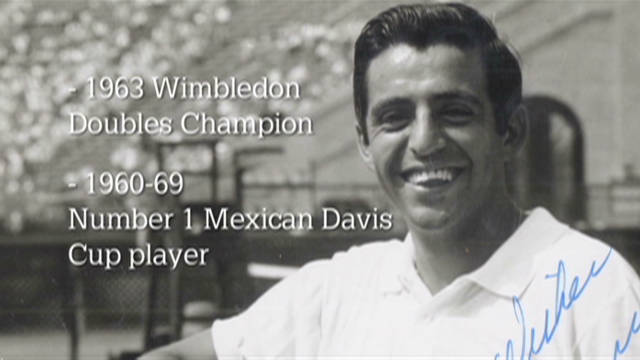
Rafael Osuna will always be remembered for his outstanding play and sportsmanship. Rafael Osuna will always be remembered for his outstanding play and sportsmanship.


STORY HIGHLIGHTS

  • Rafael Osuna is Mexico's greatest ever tennis player
  • He was tragically killed in an air crash in 1969 aged just 30
  • Osuna was the first player from Latin America to be World No. 1
  • He won the U.S. Open in 1963 and three grand slam doubles titles

(CNN) -- When Mexican Airways Flight 704 crashed into the mountains near Monterrey on June 4, 1969, it claimed the lives of 79 people including a national hero and one of the greatest players to wield a tennis racket.

He had carried the hopes of his country for a decade until his life was tragically cut short, just days after leading Mexico to an epic victory over all-conquering Australia in a Davis Cup tie, the crowning achievement of a remarkable career.

He was a grand slam winner, a former world number one and one of the most innovative doubles players in the sport's history.

Rafael Osuna Herrera was, quite possibly, the greatest tennis player you never knew, a compelling and inspirational figure, but more than 40 years since his death he has been largely forgotten.
Tennis' first Rafa

Perhaps this is because Osuna was at his peak during the 1960s, before the blanket television coverage of grand slams and major competitions such as the Davis Cup.

Clips of him in action are mostly in grainy black and white, but even to the non-expert eye his style of play and breathtaking speed on the court stood out.

His modern namesake Rafael Nadal batters opponents into submission with grueling baseline rallies, but Osuna used his lightning-fast reactions to shorten points, rushing to the net behind his service to pull off unlikely volleyed winners.

He was such a popular player, always with such good sportsmanship and always with a smile.
Bud Collins

"He was the quickest of his era," recalled legendary tennis broadcaster Bud Collins, who commentated on many of the Mexican star's biggest matches, including his 1963 U.S. Open final win over Frank Froehling on the grass of Forest Hills.

Osuna's nephew Rafael Belmar said his uncle had developed his quickness about court from his early days as a junior table tennis player, when forced to run around the table to reach the drop shots of canny older opponents.

Belmar also recalled a chance conversation with karate legend Chuck Norris, who he met while studying in the United States.

Norris was telling a story about the only two men he knew who could catch a fly with two fingers. One was the martial arts and film legend Bruce Lee, the other was Belmar's uncle Rafael.

"I was amazed," Belmar told CNN. "But in a way not surprised, he could intercept an opponent's drop shot before it bounced!"

We had to tear his game apart, but he could move like a God
George Toley

Osuna, who came from a middle-class Mexican family, studied at University of South California (USC), going there as a raw freshman and developing his game under the tutelage of coach George Toley.

"Everything he did on court was bad fundamentally, in part because he was such a natural and could get away with it," Toley wrote in a book about his experiences at USC.

"We had to tear his game apart, but he could move like a GOD!"

Osuna's first notable success came at Wimbledon in 1960 when he won the doubles with his USC roommate Dennis Ralston, the first unseeded pair to achieve the feat.

It was the catalyst for an outstanding doubles career, which saw him claim further grand slam titles at the U.S. Open in 1962 and Wimbledon in 1964 with his compatriot and Davis Cup partner Antonio Palafox.

Maybe Mexico is not so good at celebrating our heroes
Rafael Belmar

Their doubles combination helped Mexico to the Davis Cup final in 1962, but they were beaten by one of the greatest Australian line-ups of all-time, spearheaded by Rod Laver.

Collins believes that had Osuna maintained his college partnership with Ralston, his success might have been even greater in grand slams, but it was with Palafox that the pair experimented with a new formation that is commonly used today.

When serving, the other player would straddle the center line, keeping hunched down low to avoid being hit, before springing up to intercept their opponent's return.

It's called the "I-formation" but Collins said Osuna and Palafox were the first to use it.

Such unconventional tactics were Osuna's hallmark and played a major part in his only grand slam singles success in 1963.

Froehling was renowned for his big serve-and-volley game. Osuna confounded him by standing way back behind the baseline and then floating back lobbed returns.

An easy 7-5 6-4 6-2 victory followed and a place is tennis history as the first and only grand slam champion from Mexico.

The man surpasses his achievements
Manuel Santana

It earned Osuna the International Tennis Federation's world No. 1 ranking at the end of 1963, the same year he graduated from USC with a degree in business administration.

In the pre-Open era, a professional circuit ran in opposition to the regular tennis calendar, with players like Laver joining the paid ranks after accumulating grand slam titles.

Osuna, however, spurned the opportunity and took a job with the tobacco giant Phillip Morris, while still playing full time.

"He was offered $120,000 in 1962 by Jack Kramer (who ran the pro tour) but turned it down," claimed Belmar.

"My uncle had houses in Beverly Hills, in Mexico City and the Venezuelan capital of Caracas, so money was clearly never an issue."

Keeping his amateur status meant Osuna could continue to play at Wimbledon, where with Palafox he won his final grand slam doubles crown and became the first and only Mexican to grace the cover of the official tournament program in 1964.

Osuna reached the semifinals of the U.S. Open the following year, and when the Olympic Games came to Mexico in 1968 he won the exhibition tournament in both singles and doubles.

Tennis did not become an official medal sport until the 1988 Games in Seoul but the Osuna family still hold dear the gold medals he was awarded.

Approaching the end of his career at the top, Osuna continued to play Davis Cup and on the clay in Mexico City summoned up one last giant effort as 17-time winners Australia visited for a zonal final.

Osuna won all three points for Mexico in a 3-2 victory, including a crucial singles win over Australian No. 1 Bill Bowery, again deploying unusual tactics in the fourth set to prevent his opponent from volleying before breaking his service for the final time.

No-one can know if Mexico might have progressed further -- the team lost in the next round to Brazil after Osuna had lost his life in one of his country's worse airline disasters.

Since his death, Osuna has been honored, with a statue erected and a tennis stadium in Mexico named after him.

The ultimate accolade came in 1979 when he was inducted into the Tennis Hall of Fame, but in recent years, with Mexicans struggling to make an impression on the courts of the world, his place in the national consciousness has waned.

"Maybe Mexico is not so good at celebrating our heroes, he has become an obscure figure from the past," Belmar said.

Belmar tried to follow in his uncle's footsteps, playing collegiate tennis, while others such as top 10-ranked Raul Ramirez were also inspired by his achievements.

Spanish player Manuel Santana, the 1966 men's Wimbledon champion, perhaps best sums it up: "The man surpasses his achievements."


CNN TV | HLN | Transcripts

Tuesday, November 15, 2011

Monday, October 24, 2011

AGING AND FITNESS

In a study published last year in the journal Deutsches Ärzteblatt International, Dieter Leyk and colleagues crunched finish-time data for more than 900,000 marathon and half-marathon finishers in German races, with ages ranging from 20 to 79.

The results were startling: No significant age-related decline in performance appeared before the age of 55. And even beyond that age, the decline was surprisingly gentle. In the 65-to-69 group, a full 25 per cent of the runners had times that would have ranked as above average among 20- to 54-year-olds.

Crucially, the runners in the study trained a similar amount (typically three to four times a week, for about an hour at a time) no matter what their age.

The conclusion is clear, the study authors write: “Performance losses in middle age are mainly due to a sedentary lifestyle rather than biological aging.”

Of course, few people manage to sustain even that fairly moderate level of exercise into their 40s and beyond. There are numerous possible explanations for the drop-off, including the time pressure of raising families and increased responsibilities at work. But a more subtle contribution may come from a gradual decline in the “intrinsic drive” to exercise.

When mice are left to their own devices in a cage with an exercise wheel, the amount they choose to run declines with age, long before any changes in their physical capacity are evident. While it’s not clear what determines this “intrinsic drive,” research by Mark Davis and colleagues at the University of South Carolina has suggested that it’s linked to levels of mitochondria in the brain.

Mitochondria are the “power plants” that provide energy to cells and muscle fibres. It has long been known that aerobic exercise boosts levels of mitochondria in your muscles, but a study just published by Dr. Davis’s group shows for the first time that aerobic exercise also stimulates the growth of new mitochondria in the brain.

This research remains in its preliminary stages, but the implication is that the brain responds to training like a muscle – and if it gets out of shape, it too is susceptible to fatigue and more likely to opt to stay on the couch. Regular exercise, on the other hand, doesn’t just preserve your ability to exercise as you get older; it also preserves your desire to exercise.

Alex Hutchinson blogs about research on exercise at sweatscience.com. His new book – Which Comes First, Cardio or Weights? – is now available.

Friday, July 8, 2011

Raonic - Hip Surgery

image Canadian No. 1 Milos Raonic is expected to return to the practice courts in six weeks after undergoing hip surgery 5 July in Vail, Colo.

The 20 year old sustained the hip injury during his second-round match against Gilles Muller at Wimbledon and retired from the encounter after playing five games. He subsequently withdrew from Canada’s Davis Cup tie versus Ecuador.

ATP

Wednesday, June 22, 2011

Sunday, June 19, 2011

THE GOSPEL ACCORDING TO ST. JOHN - THE BLASPHEMIST

WIMBLEDON, England — The pastor of a Baptist church near this tabernacle of tennis has posted what could be the perfect topic for his Sunday sermon on the eve of the 125th Wimbledon Tennis Championships at the All England Club.

image THE NEW YORK TIMES

Wednesday, June 8, 2011

Cat Gut ...... Not!

A firm in Norfolk collects cow intestines by the bucketful from local abattoirs and turns them into the kind of natural gut strings favoured by many of the world's top tennis players.

"It takes about four cow's guts to string the average racquet," production manager Rosina explains.

To produce the strings, the cow guts are cleaned and cut into 40ft strands before being chemically treated to preserve them.

Each string is made up of 15 individual strands which are spun very tightly together to coalesce them, before being dried out in a humid room to prevent cracking.

It is a painstaking process that takes six weeks from start to finish, but according to Rosina, it is worth the wait.

"With synthetic string, once it's in the racquet and is hit by a ball, it will stretch and stay stretched, but because gut has a natural memory, it always tries to return to its original form, therefore absorbing the shock a lot more and reducing the risk of tennis elbow."

The company, which has been plying its unusual trade for more than 100 years, also uses the same techniques to produce gut strings for harps and other early instruments.

BBC

Saturday, June 4, 2011

Nestor-Mirnyi win Paris

Canadian Daniel Nestor retained his Roland Garros doubles crown as he and Belarusian partner Max Mirnyi won their first Grand Slam title together by defeating South Americans Juan Sebastian Cabal and Eduardo Schwank 7-6(3), 3-6, 6-4 in Saturday’s final in Paris.

"It's unbelievable. I never get too old," declared Nestor. "[The] biggest goal in my career is winning Grand Slams. They're all special for different reasons. Every time you win with a new partner, that first one is an amazing feeling. Today is no exception."

Added Mirnyi, "I think any Grand Slam is a special win, but particularly for a new team it's a very important hump to get over. We knew on paper we're capable of playing well together. [But] up until you produce a result, you never know. Now having won a Grand Slam we know what we need to work on. We hope to maintain the level and hopefully get many more important wins."

World No. 3 Nestor lifted the winners’ trophy last year with Serbia’s Nenad Zimonjic, and had also triumphed in 2007 with former long-time partner Mark Knowles of the Bahamas. The 33-year-old Mirnyi also won the title for the third time, having won back-to-back trophies with Jonas Bjorkman in 2005-2006.

Tour-level debutant Cabal and partner Schwank had been the surprise of the tournament on their way through to the final, including taking out World No. 1 pairing Bob Bryan and Mike Bryan in the semi-finals. The Colombian-Argentine duo carried their good form into the final as they pushed second seeds Mirnyi and Nestor to a first-set tie-break before surrendering the opener.

ATP